
Job searching can be frustrating, exhausting, and unpredictable. You submit applications, make connections, prepare for interviews, and wait. Sometimes you get an interview, only to have the position taken down. Sometimes you hear nothing.
In today’s job market, resilience is more important than ever.
As a job search coach, I’ve heard dozens of stories from job seekers that really put resilience into perspective. Here are just a few examples from clients I’m currently helping that illustrate how tough the market is right now:
- 600 resumes submitted. 2 interviews.
- 250 resumes submitted. 0 interviews.
- Got the interview, only to have the job taken down.
- Out of work for two years.
As a former HR leader, I think of it this way too: these are future employees. Top talent navigating a very difficult market. And behind each number is a person trying to figure out what’s next, stay motivated, and find a way forward.
For college students and recent graduates, the challenges can be particularly discouraging. They’re entering a competitive market, trying to get their foot in the door, and often learning how the hiring process works along the way.
For experienced professionals, a job search can mean rethinking career goals, repositioning their experience, or considering opportunities they may not have previously explored.
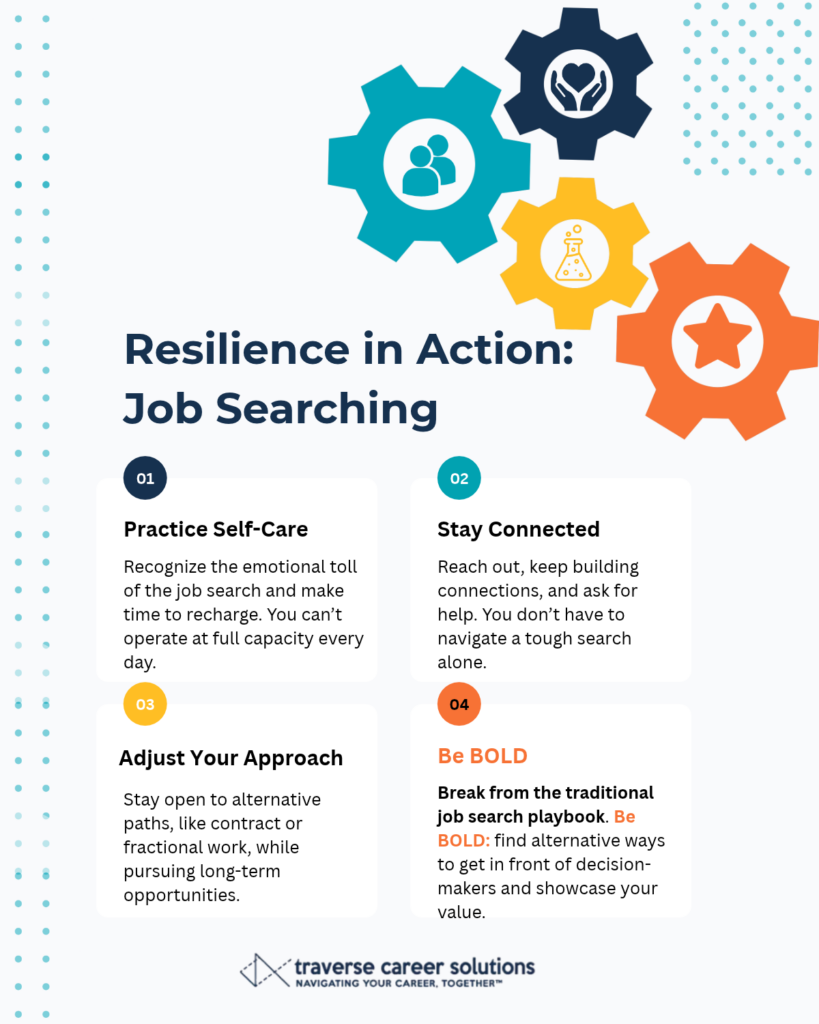
Regardless of career stage, resilience matters. And as a Career Strategist and former HR leader and recruiter, I coach job seekers to approach the process with a strategy that goes beyond submitting resumes. Here are four ways to build resilience and keep moving forward.
1. Practice Self-Care
Job searching takes an emotional toll. Rejection, unanswered applications, and uncertainty can wear you down.
Give yourself permission to recharge. You can’t operate at full capacity every day, and your job search doesn’t need to consume every minute of your time.
Taking care of yourself helps you return with renewed energy and perspective. Remember, your employment status does not define your value.
2. Stay Connected
Build and maintain relationships. Keep expanding your network, reconnect with former colleagues, reach out to alumni, and ask for help.
Don’t rely exclusively on online applications. Conversations can lead to introductions, information, and opportunities you might not find through a job posting.
I’ve seen the value of networking throughout my career. My own network has opened doors and created opportunities that would not have come through an online application.
You don’t have to know everyone. Start with the people you know and build from there.
3. Adjust Your Approach
Sometimes resilience means recognizing that what you’re doing isn’t working and being willing to try something different.
Be open to contract, fractional, or temporary opportunities while continuing to pursue a longer-term role. Consider different industries, types of organizations, or positions where your skills could transfer.
The goal isn’t to abandon what you want. It’s to remain open to different routes that could help you get there.
4. Be BOLD
Break from the traditional job search playbook.
Find alternative ways to get in front of decision-makers, showcase your value, and say, “Here I am.”
That might mean reaching out directly to someone at a company, sharing your expertise on LinkedIn, attending an industry event, or finding a way to demonstrate what you can contribute.
When I stepped outside my comfort zone and approached my own career differently, my confidence grew—and my search results improved dramatically.
Sometimes the biggest shift comes from being willing to do something differently.
I’m continually struck by the grit, determination, and resourcefulness people demonstrate as they keep going, even when the path forward isn’t clear.
But resilience isn’t about simply pushing through or telling people to work harder. It’s about having the confidence to adapt, the willingness to learn, the support to keep going, and the ability to recognize when a different approach is needed.
Whether you’re a college student looking for your first opportunity, an experienced professional navigating a career transition, or an employer thinking about how to better support your people, resilience matters.
It’s important to remember that every career includes moments of change. How we respond to those moments—and how we help others navigate them—can make all the difference.
